

A safety buffer for your stock: what it is, and when it’s worth it
· 3 minute read
Even when your stores are synced, there’s a moment when two of them sell the last unit at almost the same time. A safety buffer gives you a net for that moment: the store shows a little less than you have, and the units held back cover the double sale.
How it works
A safety buffer is set for each store separately, in “Store details” on the Stores screen, and works while stock sync is on. With a buffer of 1 and 5 units, the store shows 4. When one unit is left, it shows 0. The other stores go on showing the full quantity, unless they have a buffer too. A buffer of 0 means no buffer.
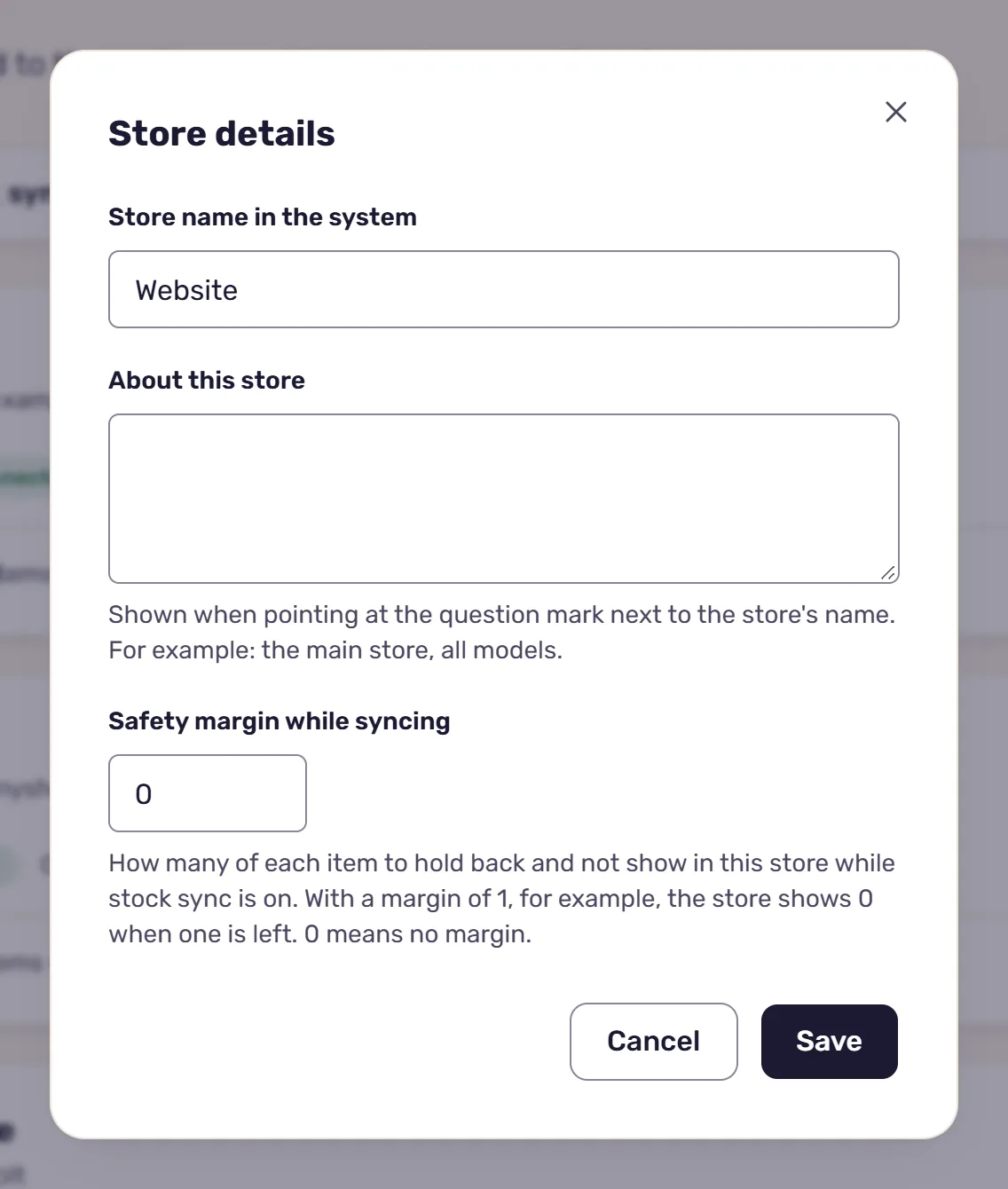
A new product you upload from StoreDuet to a store that takes part in the sync also gets the quantity there less that store’s buffer.
And Wolt?
A Wolt venue has a buffer of its own, and it works a little differently: Wolt shows the item as out of stock when as many units as the buffer are left, or fewer. Updates reach Wolt at most once every 15 minutes, so a buffer of 1 keeps the last pair from being sold twice. How the venue is updated is in the article on Wolt and your website.
When it’s worth it
- In the store or venue where orders come in fastest.
- On a Wolt venue, which is updated more slowly than the sites.
- When most of your products sell in single units, and selling the last one twice is the likely case.
What a buffer costs
A buffer hides units you could sell. With a buffer of 2, a product with 2 units left looks out of stock in that store, even though they’re in the warehouse. In a store that sells slowly, a large buffer can hide more sales than it saves.
How much to set
Start with 1 in the store or venue where orders come in fastest, and leave 0 in the rest. A larger buffer suits an item that sells several units in a row. If a double sale happens anyway, the activity log shows every change sent to the stores and when, so you can decide whether to raise it. On the causes of overselling in general, see the article on overselling.
Read next
· 4 minute read
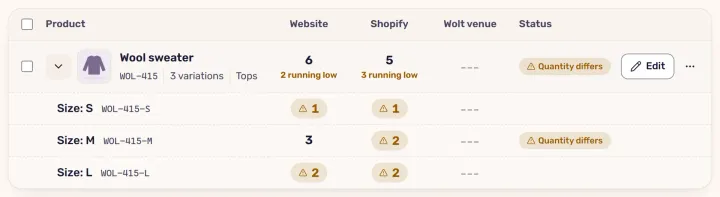
Overselling: why you sell a product that has run out, and how to prevent it
Overselling happens when a store doesn’t know a product ran out elsewhere. Why, and how StoreDuet closes the gap: sync, a safety buffer and checked updates.
· 4 minute read
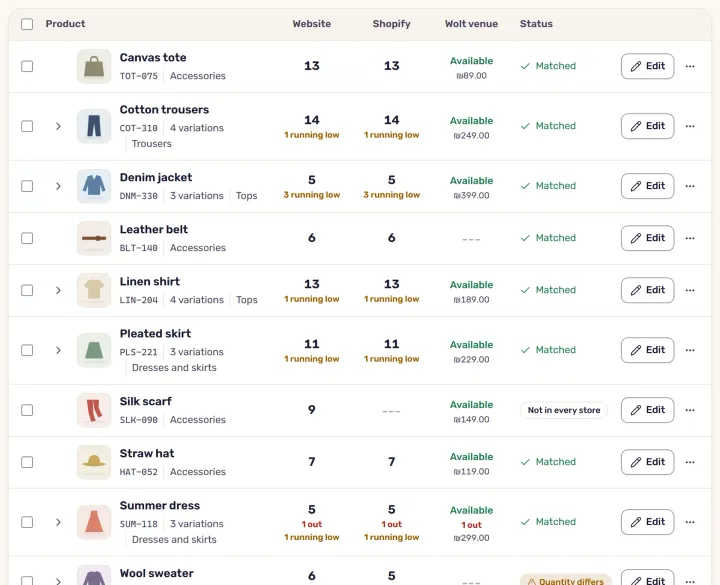
Selling on Wolt and on your website? How stock stays right in both
What StoreDuet updates on a Wolt venue and what it doesn’t, how a size sold out on your site closes on Wolt, and how a Wolt order lowers stock on your sites.